
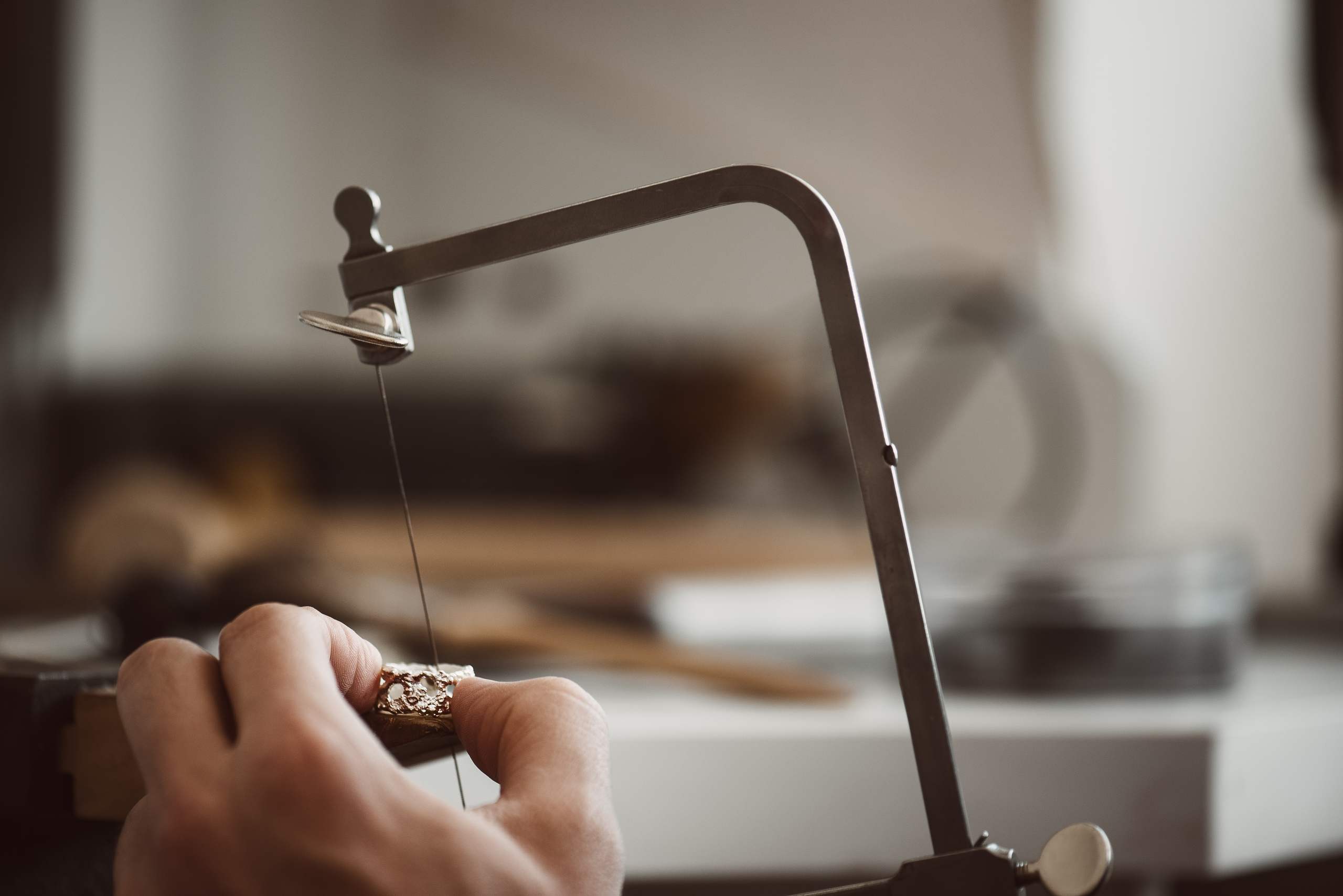
The material you select will have a dramatic effect on your finished piece. Choosing a particular material will immediately convey whether or not the design is delicate, bold, contemporary, traditional, etc.
Why Material Matters
Material is a very important aspect of a design. It is essential you consider how different materials will affect the final result. For example, a polished surface will present a refined, crisp look while a textured surface will add depth and personality to a piece. Material is an extension of the design and not just an afterthought.
Color will immediately dictate the overall balance and feeling of a piece. You should always consider the difference between warm and cool colors and how they will affect the mood of a piece. Color choices are just as important as shape and material. When all of these elements are thought of individually and together, you are more likely to be pleased with your finished piece.
The color of a jewelry piece may be uniform or may contain contrasting areas. Color contrast can be used in many ways. For instance, a design may consist of high contrasting colors that draw attention to specific areas of a piece. Alternatively, you might decide to make a design more cohesive by using a series of related colors. You may also want to use a contrasting element to pull the viewer’s gaze to a specific area of the piece. No matter what color direction you decide, use it with intention in order to create a visually appealing result.
You can alter a shape drastically just by changing the texture, i.e., a polished finish, matte, rough, patterned, etc. Texture may be an unexpected element in a design and is always worth exploring. You might consider combining smooth areas with textured areas to create interesting contrasts that emphasize both areas in the design.
Color, texture, material, and shape are all equally important elements of a design. It is essential that you approach the designing process with all of these variables in mind from the beginning.
Experiment Before Finalizing
Play with color, texture, material, scale, and finish before you decide on your design concept. For example, if you are creating a bracelet out of beads, explore the different ways you can make the piece unique, such as adding texture by using hammered silver beads or changing the color scheme to create a mood. You might experiment with making a series of bracelets in the same shape but with different colors or textures. When you explore all of these options, you will undoubtedly come upon a combination you hadn’t previously thought of.
By exploring all design elements thoroughly you will make more intentional choices and discover a sense of balance to your design. Balance in a design could consist of an array of factors: color, texture, shape, scale, finish, etc. All you need to do is choose one of these elements to dominate the piece, and build the rest of the details around it. Balance can be tricky to attain, but the key is to build up the design little by little. If you add too many contrasting elements, your design will suffer from them competing for attention and weakening the concept as a whole.
Designing With Intention
Develop a concept and design language that is unique to you. By exploring color, texture, shape, and finish in all of your designs, your personal style and language will emerge. The key is to make sure all elements are connected by a strong concept that ties everything together. It’s important to make your decisions with intent. Ask yourself why you chose a specific color, shape, texture, or finish. Make sure these decisions serve the purpose you intended and are not merely random elements.